
Menifee combines the 1960s retirement community of Sun City with thousands of newer tract homes built since 2000. Aimee Ghafouri helps investors sort out which Menifee properties have room for a renovation margin. Call (951) 331-8453.
Short answer: The clearest flip opportunities in Menifee are original-condition homes in Sun City and older properties in Menifee Lakes and Quail Valley. Newer tracts rarely need enough work to create a spread.

Sun City and 55+ Homes
The Sun City core has single-story homes from the 1960s and 1970s, many still with original kitchens and baths. They are affordable to buy and renovate, but buyers must meet the community’s age rules, which narrows the resale pool. Check the association rules before you buy.
Quail Valley and Older Pockets
Quail Valley and other older pockets have smaller homes on hillside lots, some with unpermitted additions or septic systems. Verify permits and sewer status early. Newer master-planned areas such as Audie Murphy Ranch compete with builder inventory, which caps resale prices.
How to Price a Fixer
Every flip is a subtraction problem. The finished value is set by what buyers recently paid for updated homes nearby. Take away the cost of the work, with a cushion for surprises behind the walls. Take away loan interest, property taxes, insurance and utilities for the holding period. Take away selling costs. The remainder has to cover both your purchase price and your profit. In Menifee, the hard part is the first number, because one renovated sale on a better street can mislead you. Ask Aimee for closed comparable sales before you write an offer.
Permits in Menifee
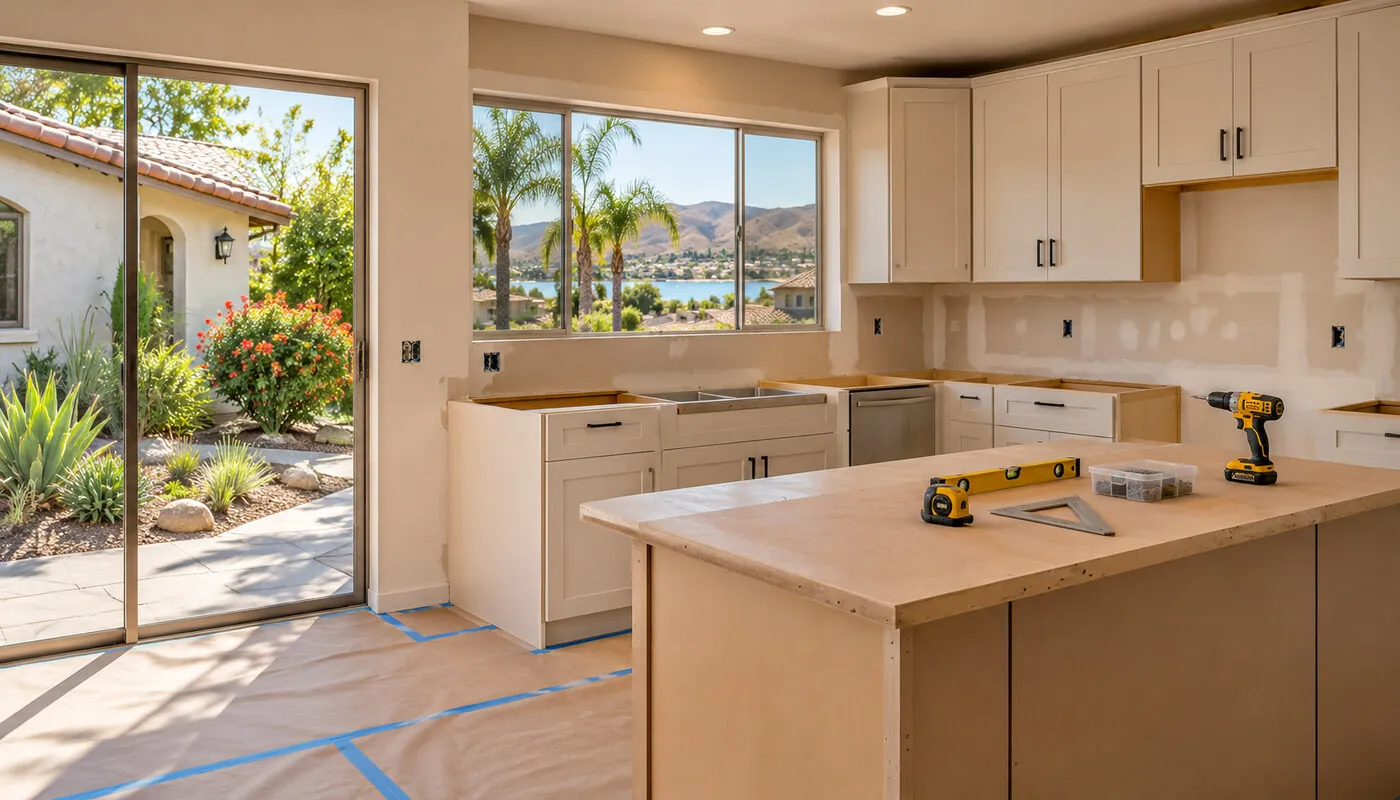
Menifee is an incorporated city, so building permits and inspections go through the city’s building and safety department. Cosmetic work such as paint, flooring and cabinets generally needs no permit. New electrical circuits, moved plumbing, water heaters, HVAC replacements, roofing, window changes and anything structural generally do. Before closing, compare the home to the city’s permit history. Garage conversions, patio enclosures and added bathrooms built without permits are common finds in older homes, and the new owner inherits the problem. Budget time for plan review if the project involves more than like-for-like replacement.
Licensed Trades and Paper Trails
On a Menifee flip the contractor list matters twice: once for the quality of the work and again at resale, when the names go on the disclosure form. Any project of $1,000 or more, counting labor and materials, requires a state contractor’s license, as does any work that needs a permit. Verify each license and its bond on the Contractors State License Board site. Use written contracts, pay by progress and collect lien releases with each payment. Keep invoices and photos of work before the walls are closed. Buyers’ inspectors ask, and good records answer quickly.
Holding Costs and Property Taxes
The purchase resets the assessed value to roughly your price, and the county sends a supplemental tax bill for the difference. Check the current bill for special assessments or Mello-Roos charges, which continue while you own the home and affect what the next buyer can afford. Insure the property with a policy written for a vacant home under renovation, since standard homeowner policies often exclude it. Add utilities, yard care and any HOA dues. At resale, the county transfer tax is $1.10 per $1,000 of price. A project that runs two months long can lose its margin to these line items.
Flipping Inside an HOA
A homeowners association adds steps to a Menifee project. Request the governing documents and the architectural guidelines during the inspection period. Submit exterior plans early, because approval can take several weeks and work done without it can be ordered removed. Check for unpaid dues or violation notices in escrow. Budget for monthly dues and for any Mello-Roos charge on the tax bill while you hold the home. Newer tract neighborhoods also have many similar homes for sale at once, so compare your finished price against active listings as well as closed sales.
California’s Flipper Disclosure Rule
Since July 1, 2024, California requires extra disclosure from anyone who resells a one-to-four unit home within 18 months of buying it. Under Civil Code 1102.6h, the seller must tell the buyer about room additions, structural changes, alterations and repairs made since the purchase, name the contractors who did the larger jobs and hand over copies of any permits. Plan for this from the first day of a Menifee project. Keep every contract, invoice and permit card in one folder. Flippers who used licensed trades and pulled permits can fill out the form in minutes, and their buyers have fewer reasons to renegotiate.
More Investor Help in Menifee
- Buying rental property in Menifee
- Selling a Menifee house to an investor
- Menifee real estate and home values
Nearby Areas
Frequently Asked Questions
Can I flip a home in a Menifee 55+ community?
Yes, but the buyer must qualify under the age restriction, so resale can take longer. Price the project with that in mind.
Do Menifee homes have Mello-Roos?
Many newer tracts do. Older areas such as Sun City generally do not. Check the tax bill for the specific property.
What is the 18-month flipper disclosure?
Sellers who resell a one-to-four unit home within 18 months of buying it must disclose the repairs and renovations they made, the contractors used on larger jobs and any permits obtained.
How long does a typical flip take in Menifee?
Light cosmetic projects can be bought, finished and resold in three to five months. Projects that need permits, structural work or HOA approval take longer. Build the timeline before you buy.
Looking for a Flip in Menifee?
Aimee Ghafouri is a real estate agent based in Temecula who grew up in Murrieta and works with buyers, sellers and investors across Riverside County. She can pull comparable sales and help you evaluate a project.
Aimee Ghafouri, 951 Properties, CAL DRE #02193341. This page is general information, not legal, tax or financial advice. Equal Housing Opportunity.