

Start with a general home inspection and a termite (wood-destroying pest) inspection. Based on the property and what those reports find, add specialists: roof, sewer line camera scope, pool and spa, chimney, foundation or structural, and mold where indicated. Rural homes on private systems also need well and septic inspections.
What does a general home inspection cover?
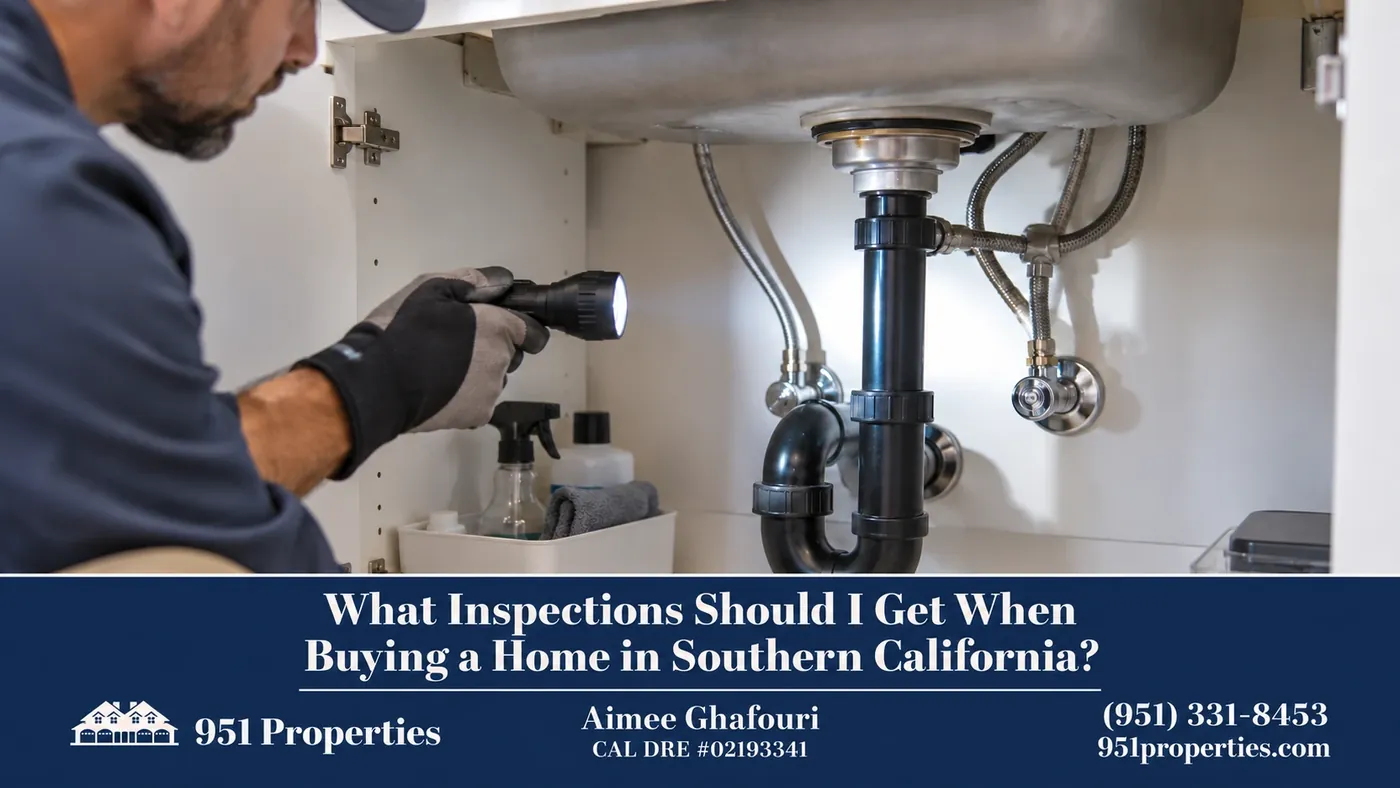
A general home inspection is a visual review of the accessible systems and components of the home. The inspector looks at the roof, exterior, foundation, attic, plumbing, electrical, heating and air conditioning, water heater, built-in appliances, windows and doors, and writes a report with photos. It is not a guarantee, and the inspector does not open walls or test everything. Its main value is identifying defects and safety concerns and telling you where a specialist should look closer. Attend the inspection if you can, and ask questions on site.
Which specialist inspections are worth adding?
Add the inspections that match the age and features of the property and the findings of the general inspector.
- Termite and wood-destroying pest: a licensed pest control company checks for termites, dry rot and fungus, and separates active problems from conditions likely to lead to them.
- Roof: a roofer evaluates the condition of the roof, flashing and past repairs, which is useful on older tile and shingle roofs.
- Sewer line scope: a camera inspection of the line from the house to the street can find roots, breaks and sags that a general inspection cannot see.
- Pool and spa: covers equipment, plumbing, surfaces, signs of leaks and safety features.
- Chimney: a chimney specialist checks the flue, firebox and structure, including cracks.
- Foundation or structural: a structural engineer or foundation specialist is called in when there are cracks, sloping floors, drainage concerns or hillside conditions.
- Mold: testing is ordered when there are signs of leaks, staining or musty odors.
What extra inspections does rural property need?
Homes on private wells and septic systems need those systems inspected by specialists. Many properties in La Cresta, De Luz and Temecula Wine Country rely on septic systems, and some have private wells.
- Well: a well company tests how much water the well produces over time and checks the pump and equipment. Water quality is tested by a laboratory.
- Septic: a septic contractor typically pumps the tank, inspects it and evaluates the leach field.
Lenders may require these reports. On acreage it is also worth confirming property boundaries, access roads and permits for outbuildings.
Who pays for inspections, and when are they done?
The buyer usually chooses and pays for inspections, and they are done early in escrow during the inspection contingency period. Who pays for a particular report, such as the termite inspection, can be negotiated in the purchase agreement. Schedule the general inspection first, as soon as your offer is accepted, so there is time to bring in specialists before your deadline. The length of that period is set in your contract.

What happens if an inspection finds problems?
You can ask the seller for repairs, a credit or a price reduction, accept the property as it is, or cancel if your inspection contingency is still in place. The seller can agree, decline or counter. Focus requests on significant items such as safety, structural, roof, plumbing and electrical issues instead of cosmetic ones. Get contractor estimates for larger repairs so your request is based on real numbers.
Frequently Asked Questions
Do I need an inspection on a new construction home?
It is a good idea. New homes can have installation mistakes or unfinished items, and an independent inspector works for you, not the builder. Ask the builder about access for inspections before you sign.
Do seller disclosures replace inspections?
No. California sellers provide disclosures about what they know, but a seller may not be aware of every problem. Inspections are your independent check of the condition of the property.
What is the difference between an appraisal and an inspection?
An appraisal estimates the value of the property for the lender. An inspection evaluates its condition for the buyer. One does not substitute for the other.
How long does a home inspection take?
It depends on the size, age and condition of the home, and many are finished within a few hours. The written report usually follows shortly after. Ask the inspector what to expect when you book.
Getting Ready to Buy?
Aimee Ghafouri is a real estate agent based in Temecula who grew up in Murrieta and works with buyers, sellers and investors across the Temecula Valley and southwest Riverside County.
Aimee Ghafouri, 951 Properties, CAL DRE #02193341. This page is general information, not legal, tax or financial advice. Equal Housing Opportunity.